Research

AI-enabled virtual agents and immersive interaction

My research sits at the intersection of virtual reality, human-computer interaction, multimodal sensing, and applied training systems. I design and evaluate AI-enabled immersive experiences that make virtual agents, complex procedures, spatial behavior, and social interaction easier to understand and practice.

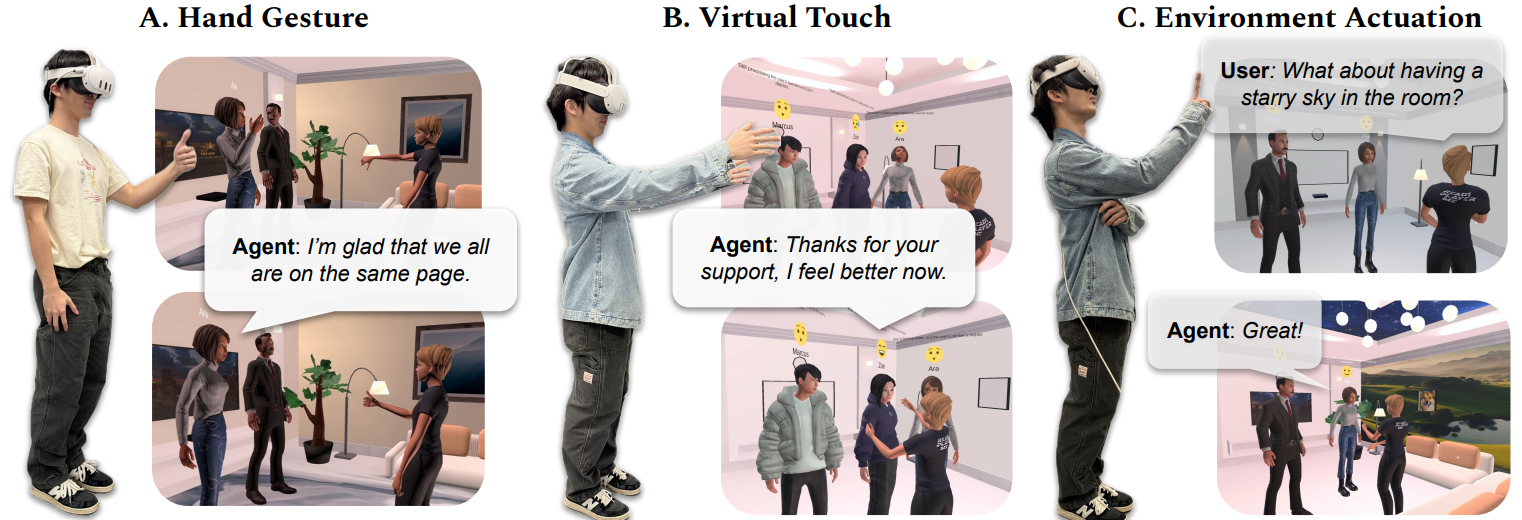
Embodied agent interactions: hand gestures, virtual touch, and environment actuation, illustrated with participants and VR screenshots.

Multimodal multi-agent interaction June 2024–Present

Current focus

Embodied Multi-Agent VR System

I build real-time systems for multimodal interaction with embodied agent groups in VR. A Unity/C# client connects to a Python/FastAPI backend through WebSockets, integrating speech recognition, LLM orchestration, speech synthesis, and generated humanoid motion. The work explores verbal and spatial interaction alongside group-level coordination.

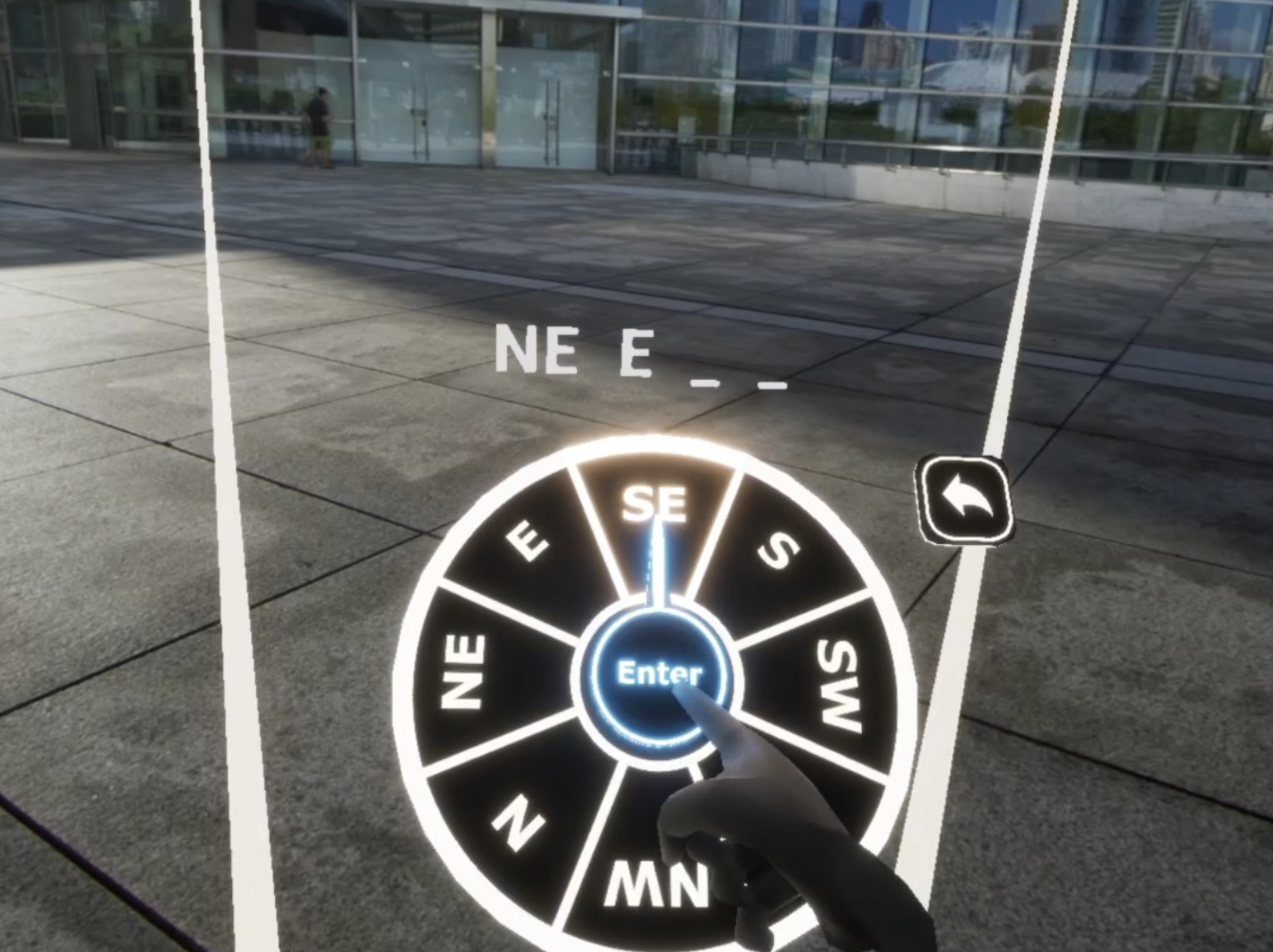
VR authentication screenshot with a radial direction-entry interface.

VR security and interaction 2023–2024

Published

Direction-Based Authentication in Virtual Reality

I developed a 3D compass interface in Unreal Engine to combine symbolic input and contextual cues for VR password entry. A within-subject, multi-session study with 32 participants evaluated entry efficiency, recall, subjective memorability, and resistance to observational attacks. Published at IEEE ISMAR 2024 with co-first authorship.

Publications

  • IEEE ISMAR 2024

    Y. Huang, D. Zhang and E. S. Rosenberg, "Direction-Based Authentication: Combining Symbolic Input and Contextual Cues for Virtual Reality Password Entry," 2024 IEEE International Symposium on Mixed and Augmented Reality (ISMAR), Bellevue, WA, USA, 2024, pp. 681-689.

    Co-first author.

  • IEEE VRW 2023

    Y. Huang, D. Zhang and E. S. Rosenberg, "DBA: Direction-Based Authentication in Virtual Reality," 2023 IEEE Conference on Virtual Reality and 3D User Interfaces Abstracts and Workshops (VRW), Shanghai, China, 2023, pp. 953-954.

    Equal contribution.
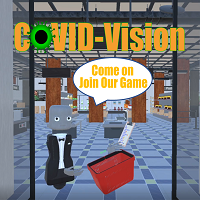
COVID-Vision VR teaser screenshot showing a public-space distancing game scene.

Embodied learning and public behavior 2020–2021

Published

COVID-Vision

COVID-Vision is a virtual reality experience designed to encourage mindfulness of social distancing in public spaces. The project uses spatial feedback and embodied perspective-taking to make invisible interpersonal distances easier to perceive.

Publications

  • IEEE VRW 2021

    D. Zhang et al., "COVID-Vision: A Virtual Reality Experience to Encourage Mindfulness of Social Distancing in Public Spaces," 2021 IEEE Conference on Virtual Reality and 3D User Interfaces Abstracts and Workshops (VRW), Lisbon, Portugal, 2021, pp. 697-698.

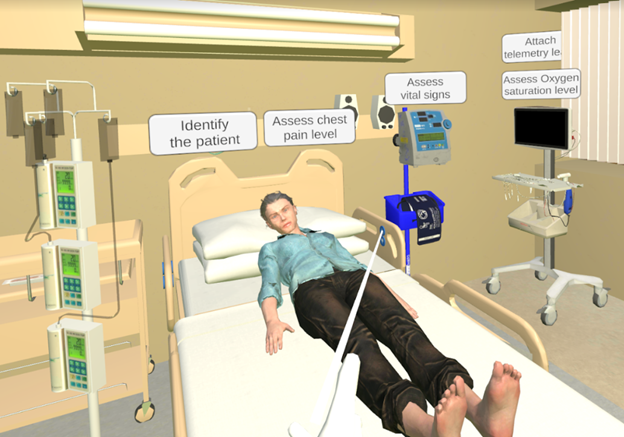
VR nurse training screenshot with a patient bed, equipment, and assessment prompts.

Healthcare education and assessment

Prototype

Nurse Training in Virtual Reality

Working with nursing education specialists, I developed two interactive Unity scenarios with patient avatars and real-time verbal feedback. Iterative expert and student evaluations informed the design. The paper is available as a preprint and is under review at ACM Transactions on Computing for Healthcare.

Publications

  • Preprint 2026

    D. Zhang, C. Bradley, C. Kissell, C. Hutton Pospick, S. Yong, Q. Jin, T. Nie and E. S. Rosenberg, "Iterative Design and Evaluation of a VR Nursing Training System: Insights from Clinicians and Student Learners," arXiv:2610.19152, 2026.

    Under review at ACM Transactions on Computing for Healthcare.

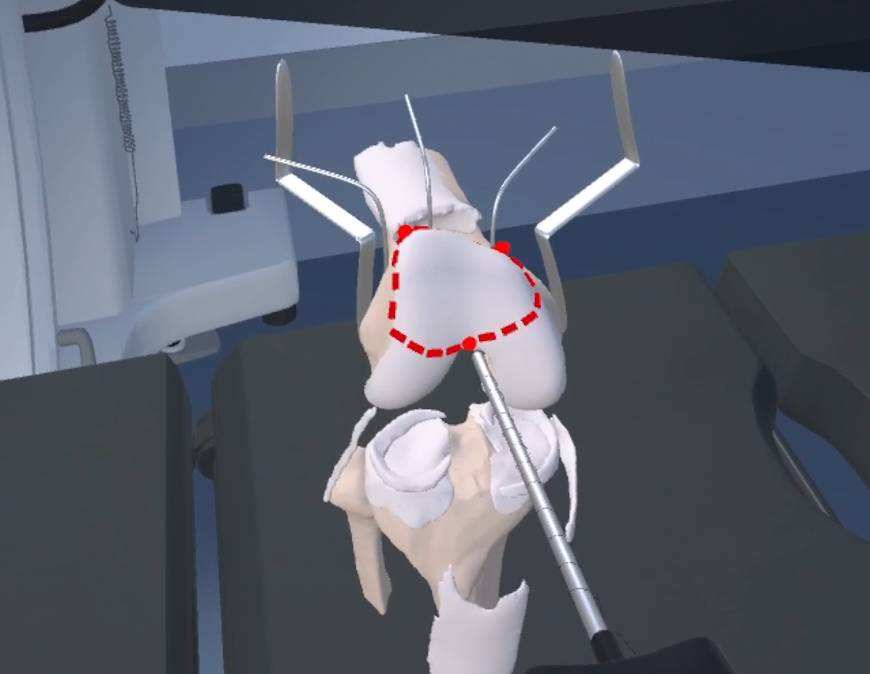
VR knee surgery simulation screenshot showing surgical tools and a highlighted incision path.

Clinical training simulation

Prototype

Knee Surgery in VR

Working with two orthopedic experts, I built a Unity prototype for a specialized knee surgery procedure and modeled more than 12 medical instruments in Blender. Interactive instruments and anatomy, learning-summary panels, and automatic video pauses at eight critical learning points support guided practice. Six surgeons evaluated the prototype.

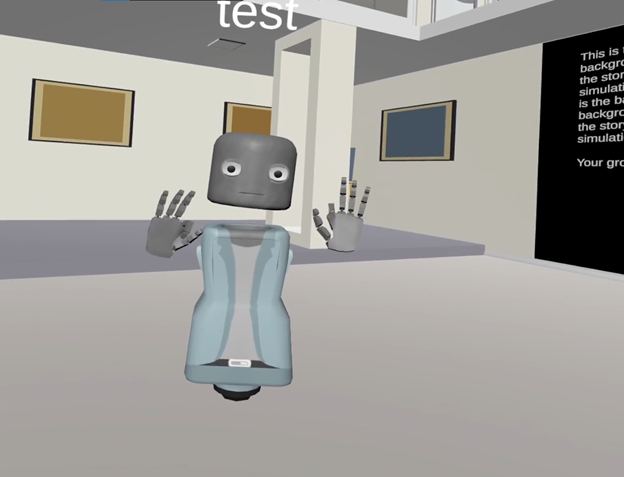
Communication Technology and Social Behavior VR screenshot showing an avatar with raised hands in a simulated room.

Social XR and teamwork

Prototype

Communication Technology and Social Behavior

This NSF-sponsored work compares video conferencing and VR over time to understand how communication technology shapes group processes, team performance, individual well-being, and social need fulfillment.